
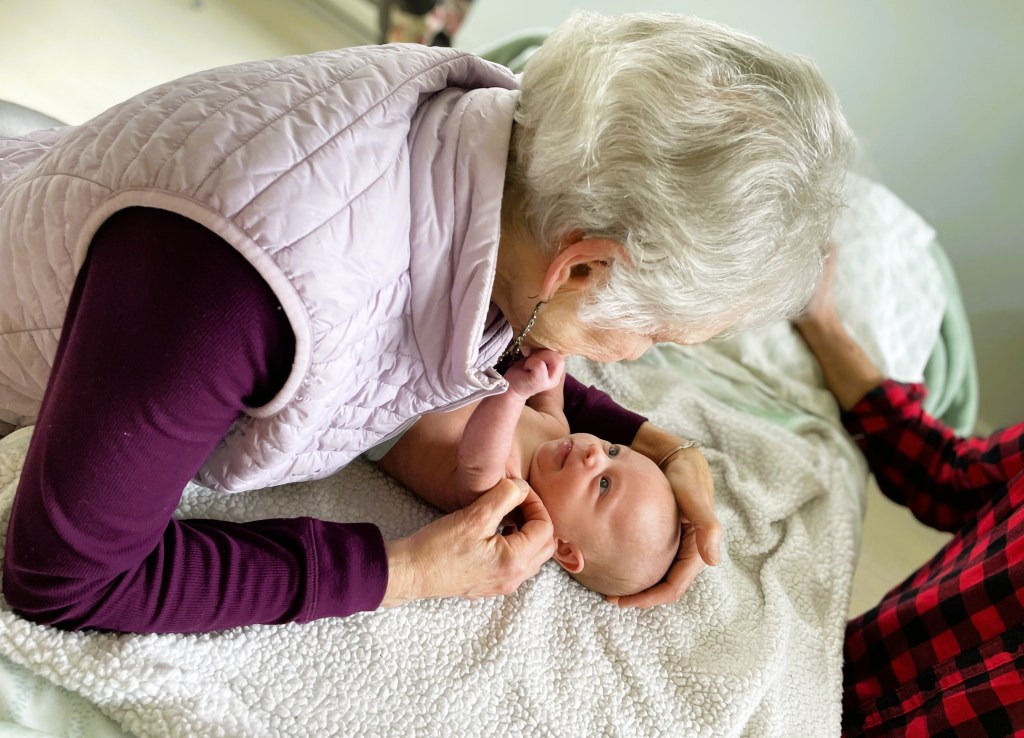

experiencing distress and pain.
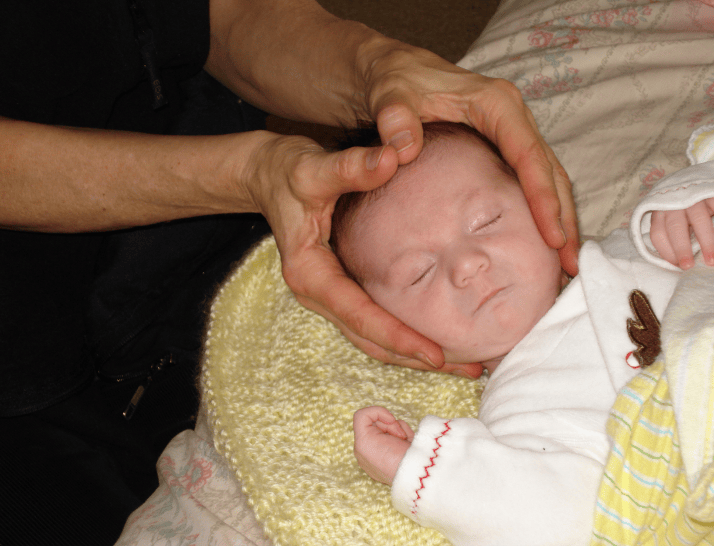
For more than forty years, I have had the privilege of working with babies, children and their families. Treatment is exceptionally gentle and is Always adapted to the child’s age, cues, comfort and readiness.
My dedication to helping babies and their parents is deeply personal. More than fifty years ago, my own baby experienced many of the difficulties described below. At that time, there was no understanding of how these early challenges could influence his physical and mental
development. Despite my training as a physiotherapist, I did not know how to help him.
My son has faced significant challenges throughout his life. That experience has stayed with me and has become part of my commitment to recognizing and addressing difficulties as early as possible, and to giving babiesv(and their parents)the help the support — that I wish had been available to me.
Is Your Baby Experiencing Pain or Difficulty Adjusting?
These are some of the signs that your baby may be experiencing pain or having difficulty adjusting to life outside the womb:
- She arches her back, her body feels stiff, and she resists sitting in a car seat or being held in the cradle position.
- He holds his body in excessive extension (arched), “lifting” his head up at a very young age, often described as having a “strong neck.” This may actually be a sign of excessive tension through the baby’s body rather than unusual neck strength.
- She consistently turns or tilts her head to one side, neglecting the other side of her body.
- He may slump and drop his head to one side.
- There are constant feeding difficulties — often a poor latch, preference for one side, pulling on and off the breast, or his jaw may seem imbalanced.
- She hates tummy time and won’t turn or even lift her head. A newborn normally has enough neck strength when lying on her tummy to lift her head just enough to clear her mouth and turn her head to one side or the other.
- He may pull or rub his hair ot ears
- She may have poor sleeping patterns.
- He may be showing delayed or asymmetrical movement.
- Her hands have remained tightly fisted since birth.
- You may have been told that your baby’s inconsolable crying is PURPLE crying and that she will outgrow it. In my experience, babies do not cry for hours on end for no reason. We work together to explore and alleviate whatever may be contributing to her distress and/or pain.
Sometimes, as a parent, you just have the feeling that something isn’t quite right. Too often, parents feel that their concerns have been brushed aside. It is very important that I listen carefully to you. You are the expert on your baby. My role is to listen to what you have observed and bring my experience and clinical skills to our work together.
Could Prenatal and Birth Experiences Be Contributing?
A baby’s experience begins before birth. There are many significant emotional stresses beyond your control that can occur during pregnancy – for example, grief following the death of someone close to the family, precious miscarriages and any one of these may affect both mother and baby.
You will see many questions about your prenatal and birth experiences on the medical intake form. Together, we can discuss whether any of these experiences may be relevant to your baby’s behaviour now and how best to address them.
Why Might a Baby Benefit from Physiotherapy?
Prenatal and birth experiences can sometimes contribute to physical restrictions or difficulties. Some circumstances I pay particular attention to include:
- A long, difficult or very rapid labour
- Forceps or vacuum-assisted delivery
- Breech, transverse or unusual positioning
- Caesarean birth
- Prematurity or emergency medical intervention
- Umbilical cord around the baby’s neck
- Drugs used during labour
- Significant physical or emotional stress during pregnancy
- The birth of twins
As Parents, You Play a Crucial Role in Your Baby’s Well Being
Babies are extremely responsive to the people and environment around them. I work with you and your baby together, helping you discover simple ways to calm, position and support your baby during feeding, settling and other challenging activities.
I will show you simple positioning, movement and play ideas that fit naturally into everyday activities. You can practise them with your baby while you are here, and I encourage you to video my demonstrations so that you have an easy reference at home.
You already have enough demands on your time and energy with a new baby. My suggestions are intentionally simple and practical — designed to become part of what you are already doing rather than another complicated set of exercises.
Length & Duration of Treatment Sessions
The initial assessment is 1¼ hours. I take a thorough history, give you time to ask questions and discuss your concerns, and assess and treat your baby without feeling rushed.
Subsequent visits are usually one hour.
Ideally, treatment begins before restrictions and compensatory patterns have become well established. The number of treatments needed varies considerably. Some relatively simple problems may respond quickly, while more complex difficulties may require additional treatment to achieve lasting change.
Signs of Distress in Babies over 3 Months
Parents sometimes first learn about my work when their baby is already several months old. It is certainly not too late to have your baby assessed so that together we can determine whether treatment may help with your concerns. You may notice that:
- He is unable to lift his head and look easily from side to side while on his stomach, or is unable to prop on his forearms.
- She neglects one side — for example, only one hand goes into her mouth or there is noticeably more movement on one side than the other.
- He continues to be irritable and has poor sleeping patterns.
- She pulls or rubs her ears or hair.
- He uses repetitive rocking motions or hits or bangs his head.
- She appears unusually floppy, slumps, or shows little interest in moving.
- He shows delayed or asymmetrical development or movement.
Other Conditions
I also have experience working with babies and children with more complex conditions, including spina bifida, cerebral palsy, torticollis, intracranial hemorrhage, visual difficulties, oxygen deprivation, fetal alcohol exposure, prematurity, ADHD, epilepsy and autism.
I collaborate with other practitioners who may be involved in your baby’s care, such as your physician, pediatrician or lactation consultant. Working together allows each of us to contribute our particular expertise in supporting your baby and your family.
CranioSacral Therapy and related approaches are described further under Techniques I Use.
During treatment with me, and especially after your baby is doing well, it is natural that you will have questions about what comes next and how best to encourage development from infancy into toddlerhood. A parent-friendly resource is CanDo Kiddo: Strengths-Based Development for Babies, Toddlers and Parents.
